Monday, August 24, 2026

How We Teach Artist Study


(Click on post for video)
(Video from a few years ago/ text goes more in depth)

Artist study is one of those subjects that I used to think I just didn't have time for.  It wasn't something I grew up learning and I just didn't think I could make the time to learn about art to teach it to my kids.  Who has time for artist study between grammar lessons and hatching caterpillars and dinner to be prepped and the baby crying?  It was just too much.

Little did I know just how easy Artist Study could actually be.

A couple of years ago, I set out on a journey to incorporate more art into our homeschool.  In order to keep it from being lost in our day, I decided to anchor it one morning a week in our morning basket.  My goal was to simply get the kids familiar with different artists and styles of art.  It wasn't to give them a complete overview of art history, but rather to consider art, enjoy it, let it shape them.  I wanted them to see art as something accessible to anyone, to form a relationship with it.  To see value in it purely for what it is.

And it had to be both quick and easy!

So here is how we got started:

1. Start early-- This is my one regret in artist study.  I waited until my kiddos were in middle school before I jumped in.  I wish I would have started younger so they were have had years more to enjoy good art.

2. Choose about 6 paintings from one artist to cover over the course of 12 weeks--We follow the Ambleside Online rotation, but you can choose any artist you enjoy.  We observe one painting per week and then loop though them a second time.  This means we are exposed to about 3 artists per year.

3. Show the painting to your student for about 5 minutes-- discuss what you both notice.  How does the title refection the action in the painting?  What details can you notice?  Does this painting remind you of anything others you've seen by the same artist?

4. Have your child tell back-- Now turn the painting over and ask them to tell back what they remember.  What details can they specifically recall?

5. Review the painting together-- Take a second look at the painting.  Where their details correct?  What do they notice now that they didn't notice before?

6. Display the painting for the following week-- Remind children to take notice of it for a few minutes every day.  Allow the details and feeling of the painting to be observed.  

7. Have your child give you an oral or written narration-- At the end of twelve weeks, ask your child which of the six paintings was their favorite.  Have them give you an oral or written narration, including any details they recall, as if you've never seen the painting yourself.  Ask them to describe why they chose that particular painting and any other information they'd like to give you.  Younger children can also try to imitate that painting with a drawing or painting of their own if they choose.

It really is that simply.  Add in a trip to a local museum if you'd like, but don't feel pressured to take it any further.  Read a book about the artists life if you want to go deeper, or just keep it simple.  Remember the goals are exposure and enjoyment.  It amazes me how this little once a week practice has completely changed the way my kids feel about artists and art history.  And our lives are so much richer for it!

Do you include artist study in your homeschool?  Would you like to try?

Wednesday, August 19, 2026

Building 903 {Review}

 Building 903

Fourteen year old twins Tessa and Theo have lived their whole lives in a utopian society.  Individuals enjoy long lives of comfort, and dissenters are promptly punished.  Their tyrannical leader has garnered dislike from most of the population, but in a life of relative ease, he's tolerated.  Until one day when Theo goes missing, and the family's peace is shattered.  Vanished... he simply vanished.  Could their 135 year old neighbor Mariam hold the key to his disappearance?  

Written in true dystopian style, Lois Lowry takes her readers on a journey... what would life be like in a world without books... without imagination... without storytelling?  A world where only "facts" reign and story is another word for "lies?"  It's a timely book, reminding us that stories reveal the innermost parts of humanity.... what motivates us and makes us truly human.  Following along the same lines as Lowry's The Giver, Building 903 touches on many of the same themes of censorship, overreaching government, collectivism vs identity, and dictatorship, only in gentler tones.  This book also reminded me a lot of Orwell's 1984.  

Building 903 is labeled for middle grades, ages 8-12 years.  In my mind, it would take a very mature 8 -10 year to handle this material.  However, for an early teen, there's a lot to be discussed here.  When does "safety" trump individual freedoms?  How does individual responsibility factor in creating a healthy society? What's the line between political disagreement and government overreach?  Lowry provides a lot of themes to be wrestled with, and this would make an interesting read for a history or government class as well.

We read this book in our homeschool with my high school sophomore and we were both hooked from the beginning.  The story is well written, easy to follow, and kept us interested from cover to cover.  We both give it a resounding recommendation.

*Disclaimer: I received a free copy of this title from the publisher.  All opinions are my own.

Monday, August 17, 2026

Ultimate Back to School Shopping List for Homeschoolers


Getting started in homeschool can very overwhelming.
Finding the perfect curriculum is only the beginning.  
Then the Back to Schools sales start and you begin to wonder,
"What do I really need?"

Since you've already got decision fatigue from flipping through curriculum catalogues,
I'm sharing with you my Ultimate Back to School Shopping List.
This is the "everything you need that you didn't know you needed" list.
Think of it as your place to start.

Can't purchase it all at once?
No problem!

Take a look at this list and find what suits your style.
Then as your homeschool budget allows,
add in some of the books, globes, and larger items.

I've denoted the very beginning items with an asterisks (*) to get you started.
Please note: I'm pretty frugal in my homeschool and
only denote name brand when absolutely necessary.

Let's take a look at the list!

*Art Supplies-- We love chalk pastels.  I never knew how much we would enjoy them till we gave them a try.  Our favorite lessons come from Chalkpastel.com  But maybe you want to try water colors... or maybe your kids go through crayons by the box.  Find a medium you're excited about. 

Atlas--great for geography study.  We started using one more in middle school for our history studies.  You can hold off on an atlas, but in time, you will want to have one.

Backpacks/ Book bags-- perfect for field trips or co-op.  Ours also get used for travel schooling, hikes, visiting family in the hospital, camping, and more.

*Beads, erasers, math manipulatives--Dollar spot erasers at Target can mix up the seasons.  I especially use these if I have kiddos from K-4th grades.

*Bible, concordance, Bible atlas-- all three are excellent for Bible study.  It's nice for everyone to have their own Bible.  But in the younger years, the concordance and atlas are mostly for my own preparation.  But around the middle school years, it's nice for your students to have access to these as well.

Binders-- We use ours for keeping loose worksheets and math pages together.  They're also great for creating art collections or morning binders.  But if you don't do a lot of paperwork, these may not be necessary.

*Bookshelves-- we never have enough.  Yeah, these are definitely a necessity.

Calculator-- I allow my kids to use them around 5th grade, but my younger kids love just playing with numbers.

*Clipboards-- great for travel, parks, or homeschooling around the house.  Clipboards are a nice surface for getting outdoors, or taking notes on the run.  I pick up several at the Dollar Tree.

Construction paper-- great for pockets, art, etc.  We use it for history and literature books, and creating our own books.  It's also great for our chalk pastel paintings.

Crafting supplies-- beads, poster paint, etc.  There's really never enough crafting supplies.  Incorporating art in to book projects, history projects, and science experiments is a great way to break up the day and show learning in a new way.

*Crayons/ Colored Pencils-- My kids have grown past the crayon stage, but they love colored pencils.  But having some sort of coloring instrument is great for posters, reports, or comic books.

*Dictionary-- my kids use them all the time.  We've invested in several over the years including Children's Dictionaries and a couple of really heavy duty extensive dictionaries.

Drawing paper-- great for sketching.  My youngest processes through drawing and I find pages of science notes, comic books about stories he's read, and silly stories about historical figures.  Having free drawing paper is a huge asset.

Dry-erase board and markers-- Dollar tree has personal size boards for spelling, math practice, and more!  Writing with a marker is a nice break from always working out math problems on scratch paper.

Flash cards-- sight words, trivia cards, math functions, etc.  I find a lot of our flash cards at Dollar Tree, but you can make your own as well.  They have some great trivia cards in the style of Professor Noggins in all types of subjects.

Games-- we have an extensive game collection and love it!  Besides books, this is where I blow my budget.  Gift educational games for birthdays, holidays, and Back to School.  Also be on the lookout of those trivia cards or make your own.

Globes and maps--great for literature and geography.  I think having a firm grasp on geography is great for placing events in history and literature.  

*Glue sticks--needed for projects, reports, etc.  Trust me, your kids will use them a lot, especially in the younger years.

Graph paper-- very needed in middle school, but also good for handwriting, and aligning math practice.  Graphing equations will become necessary in those upper elementary/ middle school years.  But graph paper is great for putting numbers in columns for all types of mathematical operations.

*Handwriting charts-- Handwriting books are great, but if you can't get one, look for a handwriting border (again, find them at the Dollar Tree).  Having that handwriting example is a great visual for learning to form letters.  We still keep our cursive chart in our learning space.

Highlighters-- Even if you chose not to highlight in your books (we don't), highlighters are great for notes and studying... especially in the later years.

Index cards-- We keep index cards in the house for studying and Scripture memory.  As my kids have grown into the middle school and high school years, I've learned how invaluable index cards really are.  

Journal or composition notebook-- This is another supply that we've started using more recently.  Some homeschoolers will start journaling at a young age and we did like the primary composition notebooks for Pre-K and Kindergarten.  Somehow we got away from them until recently.  Now we love making our own common place books and including passages that speak to us.

Lesson planner-- My lesson planner really is my brain.  I use it to not only keep up on track in our core subjects, but also to schedule some of those small subjects like geography and daily reading.  Using a lesson plan gives me a space to organize around appointments and plan special events like teatime or holiday parties.

Markers-- Markers are so much fun for drawing book or movie posters, creating brochures, coloring Story of the World pages, or just enjoying during free time.  My kids typically go through a marker phase between grades 2-5 and we just can't get enough of them.

Notebook paper-- Some people like notebooks.  I like having loose leaf notebook paper for filling binders.  Then we can add, subtract, or arrange pages and assignments as needed.  I especially stock up on notebook paper for our math curriculum.  Starting in third grade, my kiddos transfer their math problems to lined paper and we have a specific binder just for math.  

Outdoor sports equipment-- This one is probably something you already have around the house... jump ropes, kickballs, hula hoops... any kind of outdoor sports equipment to help your kids get their wiggles out and develop their gross motor skills.

Paints/ brushes-- Again, we try to incorporate art across subjects so the kids will often create posters for books, historical events, lab reports, etc.  They also like making menus and advertisements for playing restaurant, dr's office, theater, etc which is all learning.

*Pencil boxes-- Pencil boxes are great for keeping track of everyone's pencils and erasers, as well as more specialty type items like compasses, protractors, and scientific calculators.  My kids also keep timers in there for keeping track of online learning and reading.  Plus, they're easy to grab off the shelf and toss in a backpack for nature hikes, the park, the library, etc.

*Pencils & Pencil Sharpener-- Yep, we need pencils, but make sure you splurge on the Ticonderoga ones. In this case, name brand does make a HUGE difference.  And invest in an electric pencil sharpener as soon as possible.  It will save you from all the little pencil shaving mess.

Post-its-- This one might be more for me than the kids.  I keep notes everywhere: in my planner, in books I'm reading with the kids, in their school books.  This helps me keep track of my thoughts when I need to purchase items for our homeschool, or have a special discussion question I want to remember.

*Scissors-- A small pair of scissors is great for school projects and can easily be tucked into each child's pencil box.  Then we're not all fighting to use the same pair of family scissors at  once.

Stapler & staples-- I used to try to get by on the dollar store stapler, but found after awhile it just wasn't worth it.  A nice desk stapler is great for keeping sample paper work together, keeping reports together with projects, and returning items for all the kids' activities.  It's saved me a ton of time looking for things.

Thesaurus-- A thesaurus is especially useful from the middle school years on.  When my kids get tired of using the same word over and over, and are developing their writing, it's nice to have a thesaurus handy to expand their vocabulary.

Three hole punch-- This one is great for keeping any handouts, workbook pages, or pictures organized in the kid's binders.

Timeline charts/books-- This year, we're each keeping our own Book of Centuries which is like a timeline notebook.  I've been wanting to try these for a few years and this fall we made a basic notebook version to help us organize our thoughts.  I definitely wish I'd tried them sooner.

Wrap-ups-- These are a great hands-on way to practice basic math facts from addition to division.  They even have a states and capitals version.  Bonus: they don't require mom to be available for practice and they're self-correcting.

And if all else fails, stock up on pencils, paper, and a library card.  It's amazing what you and your kiddos can learn just by taking a weekly library trip.  I firmly believe so much can be learned with just a few simple tools and a thirsty mind.

Whether you're a new homeschooler this year or a veteran of 20 years, what homeschool supply can you absolutely not live without?  Leave us a comment below and let's share together.
Wednesday, August 12, 2026

Embracing Free Time In Your Homeschool

 Remember the days when we were growing up where free afternoons were a given?  School would let out and we'd rush home for a snack, only to be shooed outside to play.  Some how free times seems to have been swallowed up the rush to a sports practice or the hum of a gaming system.  And if we're not carefully, the same can happen even for those of us that homeschool.  In our race to raise well-rounded children, we can easily find ourselves caught up in an over scheduled life.

But what if we took a minute to just breathe?

What if we took a minute for our brains to truly hit the point of boredom?

Real boredom?

This is the sweet spot where creativity and imagination can blossom.  Where problems become possibilities and children can wonder.  Where life is puzzled out and genius can emerge.

How many high school graduates reach the finish line only to wonder, "Now what?"  So they jump into a degree program that fulfills the need for purpose in the moment, but find themselves asking the same question in midlife.  

What if we embraced free time NOW... while minds are still full of possibility and life is young.  What if we left our kids to wrestle with boredom and discover that there's so much potential ... potential that can only be noticed in the stillness?

What if we stepped away from an over full life and gave ourselves the same gift... time to play, time to experiment, time to wonder, time to build relationships.... TIME!

Just some thoughts from an overly busy mom trying to recapture free time in her homeschool.

Monday, August 10, 2026

Our Morning Time Basket for 10th Grade ll 2026-27 Picks!

 Morning Basket has been a part of our homeschool for so long.... I don't even remember what year we implemented it.  It must have been a long time ago because I just can't imagine starting our days any other way.  As I've said before, Morning Basket first became a foundational part of our homeschool day out of necessity.  A way of bridging the gap between waking up and charging full force into learning.  A way of sweetening our morning, building shared experiences, and finding time for delight and beauty.

Now entering year 14 of our homeschool, morning time is still going strong.  It grows and changes with our family and needs.  But it still unites us... still brings us into shared experiences and stories... still brings us into rich discussions and lively opinions... into family memories and fine arts.

Today I'm sharing with you how we make morning time work with older students  How we hit the subjects that bring us the most joy and keep challenging our minds, even in the teen years.

Folksongs/Hymns:

I love the idea of learning hymns and folksongs in our homeschool.  There's so much rich theology and history woven into music.  Now that I'm down to one student, he loves to sing.  So I'm hoping we'll do more singing this year.  I use our hymns and folksongs as a call to Morning Time.  We utilize the channel "Folksongs and Hymns" on YT and rotate through Hannah's songs of the month.  This way my 10th grader can hear each song every other day, and it gives him 2-4 minutes to gather his things for meeting at the table. We do one song a day.

Memory Work:

We use a memory box system.  I found a nice Sterlite box from Dollar Tree a few years ago, and now it's filled to the brim with Scripture we've memorized over the years.  We use this system for memorizing Scripture, but it would be great for any memory work you have in your homeschool.  Adapt it to work for you. Again, this is something we do every morning.

Current Events:

We found World Watch News 3 years ago, and love it.  It's 10 min segments of world news presented at the student's level.  It's very similar to CNN10, but from a Christian perspective.  And it's been great for me to learn what's going on in the world as well.

Bible:

We're continuing our way through Rod & Staff's Bible series.  This year, we're picking up about 1/3 of the way through level 9.  Then the curriculum ties it into what the authors were actually saying when they wrote the Bible... exploring culture and context before analyzing and applying.  I introduce the lesson on Monday mornings, the kids work independently throughout the week to cover the material, and we discuss the lesson on Friday mornings.

Additionally, we'll be adding in a Not Consumed Christmas Bible study in the fall as well as a topical study in the spring.

Artist Study:

We're again using Ambleside Online's artist study.  I love that this one is free and only takes about 5 min a week.  It's taught us so much about artists we've never even heard of.  This year we'll be studying Rockwell (my favorite), Renoir, and van Ruisdael.

Shakespeare:

Shakespeare and I have a love/ hate relationship.  I love Shakespeare, but I couldn't find a way to draw my kids into it... until 2years ago. We used Lamb's Shakespeare and Nesbit's Shakespeare for Young Readers to read a paraphrase of the play.  Then we found a YT production to watch together, broken into approximately 12 weeks. making it bite-sized for morning time.  We're going to watch the play rather than read it as that's how it was originally meant to be enjoyed.  I'll have a written copy for my kids as well if he wishes to follow along in print.  And we're pairing it with lots of discussion.  Typically we go through two plays a year, but we might try to add a third this year.  We'll be starting with Julius Caesar as it's included in our Notgrass World History curriculum.

Composer:

We've been trying to add more composer/ music study in our homeschool the last couple of years.  I started by following the Ambleside schedule, but did re-arrange a few things last year when the local symphony hosted a field trip based on American composers.  So we're planning on listening to Bernstein, Debussy, and Bach, but that may obviously change.  I like using Classics for Kids for giving a background on each of our composers.

Misc:

I also try to include picture books related to our curriculum as they apply.  It's a good way to whet my son's' appetite for further study.

Read Alouds:

We always end our Morning Time with a read-aloud.  I still like to read before bed, but as the kids have gotten older and are out more evenings of the week, we've also added a block of reading in our mornings so our books don't linger.  I shared our Read Aloud List for '26-27, but it's ever-growing.  Sometimes we detour off that list.  However, I try to at least prioritize the read-alouds that go with our history curriculum.

So, that's what I have planned so far for our 2026-27 Morning Time and how I'm making it work with a 10th Grader!

Do you do Morning Time in your homeschool?

And what are some of your favorite resources?

Wednesday, August 5, 2026

Kitchen Skills for Kids

 If there's anything predictable in a homeschool home, it's the fact that kids are always hungry.  Breakfast, Second Breakfast, Morning Snack, Lunch, and that's just the first half of the day.  Teaching kids to work in the kitchen solves a very practical need.  But it's more than that.  Learning basic cooking and meal prep skills builds confidence, independence, and responsibility.  It gives kids a very tangible way to contribute to the family, and build upon a very useful future skill.

But it's important to start with reasonable expectations.  Young children are more than capable of assisting, but they need lots of verbal instruction, lots of opportunities to practice, and lots of encouragement.  Be sure to build lots of margin into your day to take things slow.  Look for opportunities to be in the kitchen daily, making this time a part of your regular rhythm.

As your children get older, they'll be able to advance to more complex skills.  They'll be able to prepare and cook more in-depth dishes, even planning full meals.  You'll still be around to keep an eye on things, but their confidence and abilities will soar.  When they have friends over, they'll be able to prepare snacks and special treats, allowing their confidence and independence to grow.  

If you're ready to invite your children into the kitchen with you, these are a few kitchen skills they are capable of learning, broken down by age:


2-4 Years:

Toddlers love to help.  Their enthusiasm is so contagious.  Make sure to have lots of extra time in the schedule when you invite them into the kitchen.  Make it a fun and peaceful activity with lots of encouragement.

*Wash fruits and vegetables

*Cutting soft fruits and vegetables

*Gather and mix ingredients

*Tearing lettuce

*Beginning measuring ingredients

*Beginning cracking eggs

*Scooping batter into muffin tins or transferring with spoon

*Unload and sort silverware


5-8 Years:

Kindergarten and early elementary age kids are growing in their motor skills and eager to learn.  Their whole world is expanding and they're soaking everything in.  They are ready for new responsibilities and meaningful work.

*Wipe and set the table

*Unload and put away groceries

*Knead bread dough

*Measure with spoons and cups

*Roll out dough (as strength increases)

*Use cookie cutters

*Spread butter and spreads with a butter knife

*Use a peeler (with supervision)

*Crack eggs independently

*Use a cookie scoop for making cookies and muffins

*Use a box grater (closer to age 8 years)

*Beating and whisking ingredients

*Begin halving and multiplying recipes

*Peel eggs

*Make simple sandwiches, puddings, and treats

*Make grilled cheese and pancakes

*Rinse dishes and load dishwasher

*Wipe counters and tables

*Begin washing dishes by hand


9-11 Years:

As your kids grow in competence, they're ready to start helping with meal planning and grocery shopping.  They're begging to have opinions about dinners and meal times.  And they're really a big help in the kitchen.

*Take charge of simple breakfasts and lunches

*Helping with meal planning

*Make a grocery list

*Follow basic recipes

*Make simple side dishes

*Use a can opener

*Use a stand mixer

*Use the oven for baked goods

*Expand stovetop skills (browning ground beef, making soups, etc)

*Clean up the kitchen after cooking and baking


12+ Years:

Kids at this age are aching for independence.  These are all skills to help them continue building their confidence and responsibility.  Knowing that they're meaningfully contributing to the family gives them a sense of pride and self-worth.


*Calculate a timeline (with help) for preparing a meal

*Consider/calculate quantities for family meals

*Inventory the pantry and build meals based on what you have

*Prepare simple family dinners

*Plan simple meals for company

*Find suitable substitutions for ingredients as needed

*Grocery shopping list and budget

*Pack lunches and snacks

*Use most kitchen tools safely

*Manage cleanup after cooking and baking

*Safely store leftovers

*Start their own cookbook

*Learn to prepare 3+ meals proficiently


Monday, August 3, 2026

Tenth Grade Homeschool Curriculum Picks ll 26-27

My third born had an incredible summer.  In June, we got a phone call on Thursday that he had a nearly full ride scholarship to an incredible adventure.  The catch?  He was leaving on Sunday.  So at 14 years old, we packed him up for 2 weeks of backpacking over 60 hrs in the wilderness and whitewater rafting over 35 miles on the river... with no contact.  It was the longest 2 weeks of my life. :-)

Along with this adventure of a lifetime, he went on two camping trips with the family, volunteered at our local mission, went to houseboat camp, and joined a men's Bible study group.

Getting back into the groove of school is going tough.  But I'm confident that 10th grade year is going to be memorable in its own way.  Here's what we have planned for now.  I'm thinking of structuring our weeks for 4 days to allow time for our teen discipleship group.  Or at the very least, making that 5th day shorter.

Geometry and Algebra II:

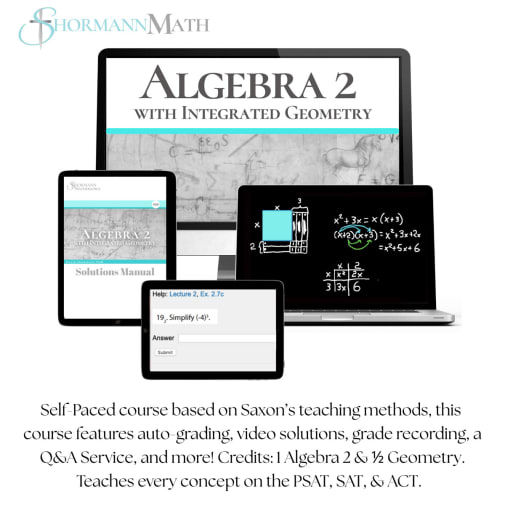
Shormann Algebra 2 Self-Paced e-Learning Course 24 month subscription

We had originally planned on going a different route with Algebra last year and instead found Shormann Math.  It's amazing!  Video lessons, auto correct, email support... I loved the format and he loved learning from Dr. Shormann.  This year he'll  continue with a half credit of Geometry and a full year of Algebra 2.


English II:

Grade 9 Reading "A Time to Heal" Set
My 10th grader is a very strong reader.  However, since we put such a strong emphasis on writing last year, we plan on weaving in a lot more formal read this year. Rod and Staff has a lot of high-level literature and we'll be using level 9. We also appreciate the fact that all the selections are clean, and build into our children's character.  I also plan on pulling several books from his Notgrass World History.  His reading list will include: A Tale of Two Cities, Julius Caesar, and Animal Farm, just to name a few.
We're going to pick up Structure and Style level 2C to keep writing fresh in his mind.  But I don't plan on him finishing this curriculum in it's entirety this year.


In the past, we've used Rod and Staff grammar.  While I love that program, we've gotten to a point where it's college-level.  This year, we're looking for something quick, to the point, and effective.  I've used Easy Grammar with my oldest and liked it.  So we'll be returning to that for my 10th grader.

Chemistry: 
Discovering Design with Chemistry Set
Third kid and this is my first experience with Chemistry in our homeschool.  But we have had some experience with Berean Builders Physics.  Good experience.  So I'm looking forward to see where the Christy class goes.

World History:
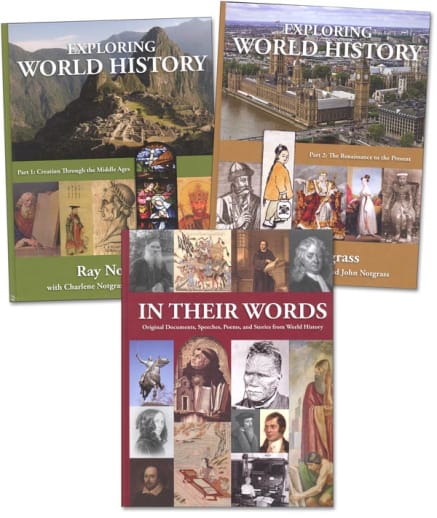
Exploring World History Curriculum Package
I love Notgrass' history program in the high school years.  We focus on the history portion, but will also be pulling some of the historical fiction for our English credit.

French II:


I've tried to get all three of my kids to take Spanish.  I've been out of luck all three times.  So online French it is.  This will be his second year learning French and he's really come a long way.  My oldest used Rosetta Stone, and I wasn't very impressed with the voice recognition.  However, I haven't been able to find a course that our charter will pay for, and still covers the speaking element.  Any advice?

Robotics:


This is probably the class that he's most excited for.  He is heavily motivated to learn coding and programming so we've signed him up for a Robotics course at our charter.  He's been taking Robotics with them for several years and has a great relationship with the teacher.

PE:


He's still taking gymnastics/ trampoline classes, but to round out his PE credit, we'll be adding in swimming and cycling, and weight lifting as the weather turns.

Bible:

Grade 9 Bible Workbook

We're continuing with Rod and Staff level 9.  This curriculum runs from level 5-10, but that doesn't necessarily coincide with grades.  Rather, each level looks at a different part of the Bible, what was happening culturally with the people, what was the background, etc.  This year, he's in level  which covers who God is and how He reveals Himself to His people.  Additionally, we'll do a couple of studies from Not Consumed, and read through a handful of Christian growth books together.

Morning Time:

Next week, I'll go more in depth into what exactly is in our Morning Basket, but some subjects we'll explore this year include apologetics, Shakepeare, and current events.  These are enrichment topics that we'll be studying together before launching into independent study.

Outside Classes:

Choir--He will be continuing on in the senior high choir and will be involved in that for about 14 weeks in the fall, and then 14 weeks in the spring.

Youth Group--He'll be entering his first year of high school youth group where he'll be a part of a discipleship group and attend camps and Bible study intensives

Trampoline-- 1-2x/week, he'll continue trampoline lessons in big trampoline, double mini, and some tumbling at our local gym.

Homeschool Teen Discipleship Group--He was a part of a homeschool group last year that we're hoping will continue this year.  This will fall on our 5th, short school day.

A lot of the curriculum that we're using this year, we've used in the past with great success.  While I try to tailor our year to each child's needs, I also find that when we find something we like, it's best to stick with it.  So many of these curricula are returning from previous years.  Plus, he's been very lucky to find several outside opportunities that fit his interests this year.  He'll certainly be busy, but I don't think my social butterfly would have it any other way.

What curriculum are you using for your 10th grader?

Related Posts with Thumbnails